Introduction
Higher education is experiencing significant changes as technology, international cooperation and evolving career expectations reshape the way people learn. In 2026, universities are expected to do more than provide academic knowledge. They must also help students develop practical skills, critical thinking and the ability to adapt to changing professional environments.
Poland remains an important option for students exploring European higher education. Its universities offer programmes across business, engineering, science, healthcare, information technology and the humanities. At the same time, digital transformation is creating new opportunities and challenges for educational institutions.
Understanding these developments can help students make better academic decisions and prepare for future careers.
1. The Growing Importance of Higher Education in Poland
Poland offers a diverse higher education system with public and private institutions serving domestic and international students. Universities provide undergraduate, postgraduate and research opportunities in various academic disciplines.
For international applicants, studying in Poland may offer the opportunity to experience European academic life while developing professional and intercultural skills. However, the value of a particular degree depends on several factors, including the institution, programme quality, accreditation and relevance to a student’s career goals.
Prospective students should carefully compare curricula, teaching methods, language requirements and available student services before applying. They should also verify admission requirements through official university websites.
Making an informed decision is more useful than choosing an institution based solely on popularity or promotional claims.
2. Artificial Intelligence Is Transforming Education
Artificial intelligence is becoming an important part of modern education. AI-powered applications can help students understand difficult concepts, organise research, practise languages and review their learning progress.
Teachers can also use technology to develop educational resources and explore different ways of presenting complex subjects. These applications may support learning when used thoughtfully and in accordance with institutional policies.
Nevertheless, AI cannot replace every aspect of education. Students still need to evaluate information, develop original arguments and demonstrate their understanding independently.
Universities must establish clear expectations about AI use in assignments, examinations and research. Students should understand when assistance is permitted and when they must complete work independently.
The future of higher education will likely depend on balancing technological innovation with academic integrity and human judgement.
3. Digital Learning and Flexible Study Options
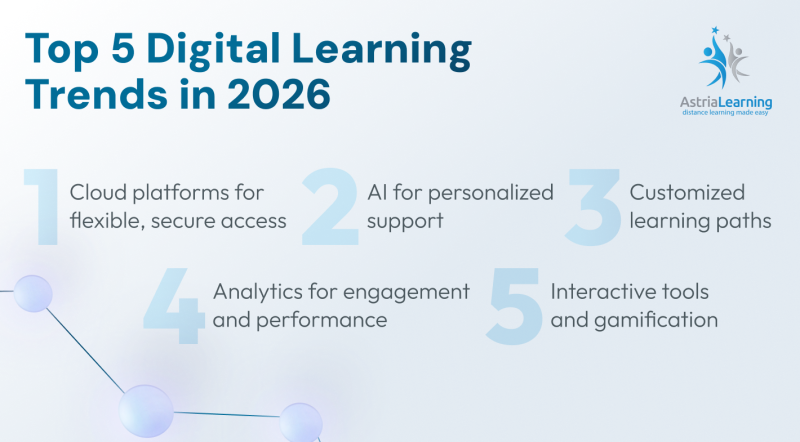
Digital learning has expanded the ways students access educational materials. Online lectures, virtual classrooms and digital libraries allow learners to engage with resources beyond traditional classroom settings.
Blended learning, which combines online activities with face-to-face teaching, can provide additional flexibility. Students may review lecture materials independently while using classroom time for discussion, practical exercises and collaborative work.
However, successful digital learning requires more than access to a computer or internet connection. Students need reliable resources, effective time management and opportunities to communicate with instructors.
Universities also need to ensure that digital learning materials are accessible and that students can receive appropriate academic support.
For applicants considering a Polish institution, it is worth checking whether their preferred programme includes online components, laboratory sessions, attendance requirements or other specific learning arrangements.
4. International Students and Global Opportunities
International education can help students develop independence, communication skills and a broader understanding of different cultures. Poland’s higher education institutions attract applicants interested in a range of academic programmes and international experiences.
Students planning to study abroad should prepare carefully. Important considerations include tuition fees, accommodation, living expenses, language requirements, health insurance and documentation.
Admission requirements differ between universities and degree programmes. Visa and residence procedures can also vary according to nationality and individual circumstances.
Applicants should therefore consult official university guidance and relevant government information rather than relying entirely on social media posts or unofficial education agents.
Learning basic Polish may also make everyday activities easier, even when the selected programme is taught in English.
5. Practical Skills and Career Preparation
Employers often value graduates who can apply their academic knowledge to real-world problems. For this reason, practical learning is an important consideration when evaluating a degree programme.
Projects, internships, laboratory activities, presentations and case studies can help students connect theory with professional practice. They can also strengthen teamwork, communication and problem-solving abilities.
The most useful opportunities will depend on the subject being studied. An engineering student may benefit from laboratory projects, while a business student might gain experience through market research or financial analysis.
Students should review the actual curriculum to determine whether these activities are included. They should also investigate career services, internship arrangements and opportunities to work on practical assignments.
Although a degree can support career development, employment outcomes depend on multiple factors and cannot be guaranteed by any institution.
6. Sustainability and Responsible Innovation
Environmental sustainability is becoming an important consideration across many industries. Universities can contribute by researching environmental challenges, improving campus practices and introducing sustainability-related subjects.
Students in business, engineering, agriculture, architecture and other fields may encounter questions about energy efficiency, responsible resource use and environmental management.
Understanding these issues can help learners recognise how professional decisions affect communities and natural resources.
Responsible innovation also includes ethical technology use, data protection and awareness of the social effects of new digital systems.
By combining academic knowledge with ethical and environmental awareness, universities can help students prepare for a changing world.
7. The Importance of Critical Thinking
Access to online information has made research easier, but it has also increased the importance of evaluating sources carefully.
Students may encounter inaccurate statistics, outdated advice and AI-generated information that contains errors. Critical thinking helps learners assess evidence, compare different viewpoints and develop reasoned conclusions.
These skills are valuable across all academic disciplines. They support stronger research, more effective communication and better decision-making.
Students can strengthen critical thinking by consulting credible sources, checking publication dates, questioning unsupported claims and clearly distinguishing facts from opinions.
Universities can encourage these habits through research assignments, classroom discussions and opportunities to defend arguments using reliable evidence.
8. How Students Can Prepare for University in 2026
Students preparing for higher education can take several practical steps.
First, identify academic interests and compare programmes based on curriculum, admission requirements and long-term goals.
Second, develop digital literacy and learn to use relevant technology responsibly. Basic research skills, online communication and information evaluation are useful across many fields.
Third, improve time management. University study often requires independent reading, assignment planning and consistent preparation.
Fourth, develop communication and teamwork skills through group projects, presentations and extracurricular activities.
Finally, create a realistic financial plan. Consider tuition, housing, transport, food, insurance and other living costs before committing to an international programme.
These steps can make the transition to university more manageable and help students approach their education with greater confidence.
Conclusion
The future of higher education in Poland will be shaped by technological developments, international cooperation, practical learning and changing professional expectations. Artificial intelligence and digital education can create valuable opportunities, but students also need critical thinking, ethical awareness and strong academic foundations.
For prospective students, choosing the right university requires careful research and realistic planning. Comparing programmes, verifying official requirements and developing transferable skills can support better educational decisions.
Ultimately, higher education is not simply about earning a qualification. It is an opportunity to develop knowledge, independence and the ability to continue learning throughout life.