Artificial intelligence is rapidly becoming part of everyday education. From helping students understand difficult concepts to supporting teachers with lesson planning, AI is changing how learning takes place both inside and outside the classroom. In 2026, the conversation is no longer simply about whether students should use artificial intelligence. Instead, schools and universities are increasingly focused on how it can be used responsibly and effectively.
The growth of AI-powered educational tools is creating new opportunities for personalized learning, research, writing, problem-solving, and skill development. At the same time, students need to understand the limitations of these technologies and continue developing independent thinking, creativity, communication, and other human skills.
Personalized Learning Is Becoming More Accessible
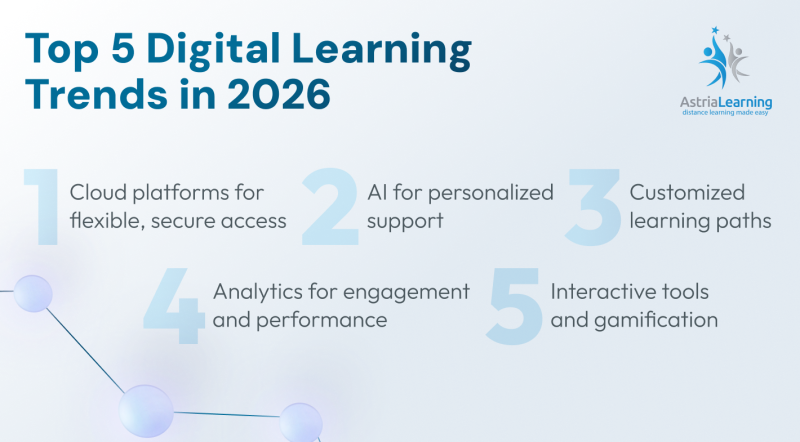
One of the biggest advantages of artificial intelligence in education is its ability to support personalized learning. Traditional classrooms often require teachers to work with students who have different learning speeds, interests, and levels of understanding.
AI-powered platforms can analyze learning patterns and provide students with materials that match their individual needs. A student who struggles with mathematics, for example, may receive additional explanations and practice exercises, while another student who understands the subject quickly can move toward more advanced problems.
This approach can make education more flexible. Instead of expecting every learner to follow exactly the same path, technology can help create learning experiences that respond to individual progress.
AI Can Support Students With Difficult Subjects
Students frequently encounter topics that are difficult to understand from a textbook or a single classroom explanation. AI tools can provide additional explanations, examples, summaries, and practice questions.
For example, a student studying a complex scientific concept can ask for a simpler explanation and then request a practical example. This can make difficult information easier to approach.
However, students should treat AI as a learning assistant rather than an automatic source of truth. Information generated by AI can sometimes be incomplete or inaccurate. Checking important facts against textbooks, academic sources, and reliable websites remains an essential part of learning.
The Role of Teachers Is Changing
The growth of AI does not mean teachers are becoming less important. Instead, their responsibilities are evolving.
Teachers can use AI to reduce time spent on repetitive administrative tasks, generate initial lesson ideas, create practice materials, and identify areas where students may need additional support. This can give educators more time to focus on teaching, mentoring, discussion, and personal interaction.
Human guidance remains particularly important when students need motivation, emotional support, feedback, or help developing complex ideas. Technology can provide information, but effective education also depends on relationships and communication.
AI Is Changing How Students Approach Research
Research is another area where students are experiencing significant changes. Instead of spending hours searching through general information, students can use AI tools to generate starting points, identify concepts, organize ideas, and develop research questions.
This can make the early stages of research more efficient. However, students still need strong research skills. An AI-generated answer should not automatically be treated as an academic source.
Students should learn how to evaluate information, identify trustworthy references, compare different viewpoints, and verify claims before using them in academic work. These skills are becoming even more important as AI-generated content becomes easier to produce.
Critical Thinking Is More Important Than Ever
The widespread availability of AI creates an interesting challenge for education. If students can receive an instant answer to almost any question, they may become overly dependent on technology.
For this reason, critical thinking is becoming one of the most valuable skills students can develop.
Rather than simply asking an AI tool to provide an answer, students can use it to explore different perspectives and then form their own conclusions. They can question the information, look for supporting evidence, identify weaknesses, and compare alternative explanations.
The goal should not be to remove technology from education. The goal is to teach students how to think effectively while using technology.
AI Literacy Is Becoming an Essential Skill
Understanding how AI works at a basic level is becoming increasingly useful for students across different academic fields. AI literacy does not necessarily mean learning advanced programming.
Instead, students should understand concepts such as how AI systems generate responses, why outputs can contain errors, how data can influence technology, and why privacy and ethical considerations matter.
These skills can help students make better decisions when using AI tools for studying, research, communication, and future employment.
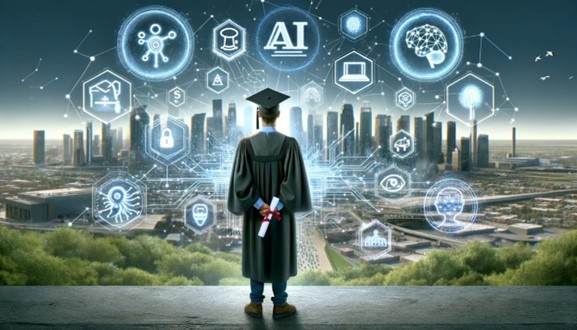
Preparing Students for an AI-Driven Workforce
The workplace is also changing as organizations adopt automation and AI-powered systems. Students entering the workforce will likely encounter AI tools regardless of whether they pursue technology-related careers.
A marketing professional may work with AI-assisted analytics. A designer may use generative tools during creative projects. A business graduate may interact with automated data systems, while a researcher may use AI to organize large amounts of information.
Education therefore needs to prepare students for collaboration between people and technology. Technical knowledge can be valuable, but adaptability and continuous learning are equally important.
Human Skills Still Matter
Although AI can perform many tasks quickly, human skills remain essential.
Communication, leadership, empathy, creativity, collaboration, ethical reasoning, and problem-solving cannot simply be replaced by access to an AI tool. In many situations, these abilities determine how effectively people use technology.
For students, this means developing a balanced skill set. Learning how to use AI should happen alongside learning how to communicate clearly, work with others, evaluate information, and develop original ideas.
Responsible Use of AI in Education
The growing use of AI also creates questions about academic integrity, privacy, fairness, and responsible technology use.
Students should understand when AI assistance is acceptable and when an assignment requires independent work. Universities and schools can help by establishing clear policies and teaching students how to acknowledge AI assistance when appropriate.
Privacy is another important consideration. Students should avoid entering sensitive personal information, confidential academic material, or other private data into AI systems without understanding how that information may be handled.
Responsible use is ultimately about combining technological possibilities with good judgment.
What the Future of Learning Could Look Like
Education in the coming years is likely to become more flexible and technology-supported. Students may have access to AI learning assistants that help them practice skills, receive explanations, organize study plans, and explore subjects according to their interests.
At the same time, classrooms will continue to provide something technology cannot fully reproduce: human interaction.
Teachers, classmates, discussions, collaborative projects, presentations, and real-world experiences all contribute to education. The most effective future learning environment is therefore unlikely to be completely human or completely automated. Instead, it will combine the strengths of both.
Conclusion
AI is changing education by making learning more personalized, accessible, and interactive. Students can use artificial intelligence to explore difficult subjects, organize ideas, practice skills, and prepare for a changing workforce.
However, successful learning requires more than technology. Students must continue developing critical thinking, creativity, communication, research skills, and independent judgment.
In 2026, the most important question is not whether AI belongs in education. It is how students and educators can use it responsibly while keeping human learning at the center. When technology is combined with strong teaching and thoughtful student engagement, it can become a powerful tool for building the skills needed for the future.