Traditional classroom education provides students with important theoretical knowledge, but modern higher education increasingly recognizes the value of learning through practical experience. Experiential learning allows students to apply what they study in real or realistic situations, helping them connect academic concepts with practical challenges.
Experiential learning can take many forms, including internships, research projects, fieldwork, simulations, laboratory activities, community projects, and practical assignments. These experiences can make education more engaging while helping students develop skills that are valuable both inside and outside the classroom.
Understanding Experiential Learning
Experiential learning is an approach in which students learn by actively participating in an experience and reflecting on what they have learned. Instead of only listening to lectures or reading textbooks, students have opportunities to apply knowledge and make decisions.
For example, a business student might develop a marketing plan for a real organization. An engineering student may work on a practical design project, while an education student could gain experience through classroom observation or teaching practice.
These experiences create a connection between academic theory and real-world application.
Connecting Theory With Practice
One of the biggest advantages of experiential learning is that it helps students understand how theoretical knowledge can be used in practical situations.
A concept may seem simple when explained in a textbook but become more meaningful when students encounter it during a project or workplace experience.
Applying knowledge can also reveal challenges that are difficult to understand through theory alone. Students learn that real situations may require flexibility, communication, research, and problem-solving.
This connection can make academic learning more relevant and memorable.
Developing Practical Skills
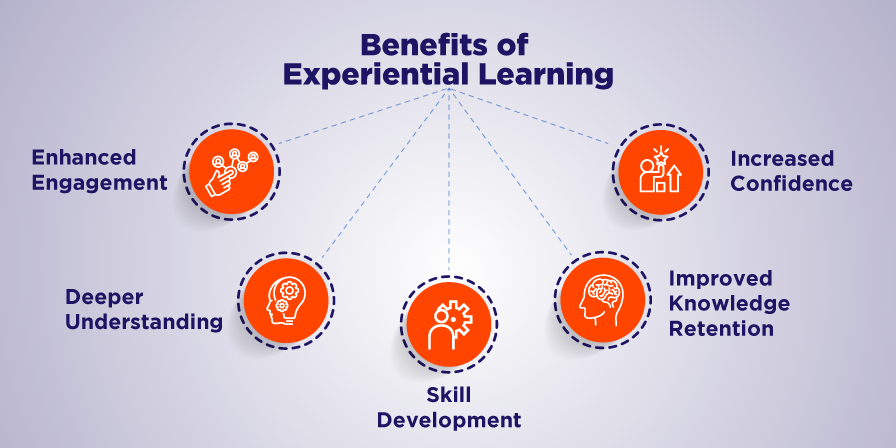
Employers often look for graduates who can do more than demonstrate academic knowledge. They also value communication, teamwork, organization, problem-solving, adaptability, and technical abilities.
Experiential learning gives students opportunities to practice these skills.
A group project, for example, may require students to divide responsibilities, communicate regularly, resolve disagreements, and complete work within a deadline. These experiences can help students become more comfortable handling responsibilities that are common in professional environments.
Improving Problem-Solving Abilities
Real-world situations rarely provide students with perfectly defined problems. Experiential learning can expose students to situations where they need to identify problems, gather information, evaluate possible solutions, and make decisions.
This process encourages students to think beyond memorized answers.
When students encounter unexpected challenges, they learn to adjust their strategies. Over time, this can strengthen their ability to approach unfamiliar problems with greater confidence.
Increasing Student Engagement
Students may become more engaged when they can see how their studies relate to real-world situations. Practical projects often give learners a clear purpose for using the knowledge they gain in class.
For example, researching a real community issue can feel more meaningful than completing a purely theoretical exercise.
Engagement can also increase when students have opportunities to make decisions about their projects. Having some control over the learning process can encourage curiosity and active participation.
Building Professional Experience
Experiential learning can help students gain experience before entering the workforce. Internships, placements, research projects, and industry collaborations allow students to understand professional expectations.
Students may learn how organizations communicate, manage projects, meet deadlines, and solve problems.
This experience can also help students understand what types of careers interest them. A practical placement may confirm an existing career goal or encourage a student to explore a different direction.
Strengthening Communication and Teamwork
Many experiential activities involve collaboration. Students may need to work with classmates, teachers, professionals, community organizations, or other groups.
These interactions can improve communication skills.
Students learn how to explain ideas, listen to feedback, divide responsibilities, and work toward shared goals. They may also encounter different perspectives that encourage them to become better listeners and more flexible team members.
Encouraging Reflection
Reflection is an important part of experiential learning. After completing an activity, students can consider what happened, what they learned, what challenges they faced, and what they could improve.
Reflection turns an experience into a learning opportunity.
For example, after completing a group project, students can evaluate how effectively the team communicated and how responsibilities were managed. These observations can help them improve their approach to future projects.
Supporting Creativity and Innovation
Experiential learning can encourage students to experiment with ideas. When learners are given practical challenges, they may need to develop creative approaches rather than simply follow predetermined instructions.
This can be especially valuable in fields where innovation is important.
Students can learn that there may be several possible solutions to a problem. Testing different ideas can also help them understand that unsuccessful attempts can provide useful information.
Preparing Students for Changing Careers
Career paths are becoming increasingly flexible. Graduates may change roles, industries, or professional responsibilities throughout their working lives.
Experiential learning can help students develop transferable skills that remain useful across different career situations.
Communication, research, collaboration, adaptability, and problem-solving are valuable in many industries. Students who develop these abilities through practical experiences may feel more prepared to respond to future changes.
How Universities Can Expand Experiential Learning
Universities can provide experiential opportunities through several approaches. These may include internships, laboratory work, field studies, entrepreneurship programs, research projects, simulations, community engagement, and industry partnerships.
Courses can also include practical assignments that require students to solve realistic problems.
The most effective activities should connect clearly with learning objectives. Students should understand what they are expected to learn and have opportunities to reflect on the experience afterward.
Making Experiential Learning Accessible
Not every student has the same access to internships or external opportunities. Universities can therefore provide multiple forms of experiential learning within academic programs.
Virtual projects, simulations, research assignments, campus activities, and collaborative projects can provide practical experiences without requiring students to travel or work for an external organization.
Creating different options can make experiential learning available to a broader range of students.
Conclusion
Experiential learning provides university students with valuable opportunities to connect academic knowledge with practical experience. Through projects, internships, research, simulations, and other activities, students can develop problem-solving abilities, communication skills, teamwork, creativity, and professional confidence.
The value of experiential learning extends beyond individual courses. It can help students understand their interests, prepare for professional environments, and become more adaptable lifelong learners.
As higher education continues to evolve, combining theoretical knowledge with meaningful practical experiences can create a more engaging and effective learning experience for students.