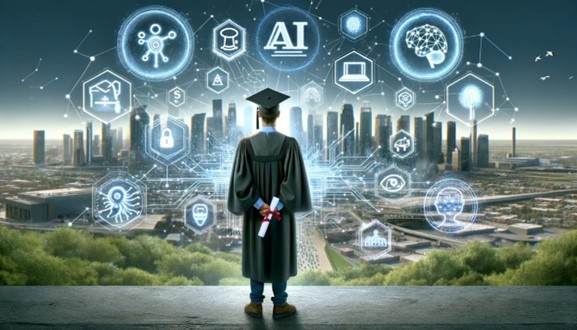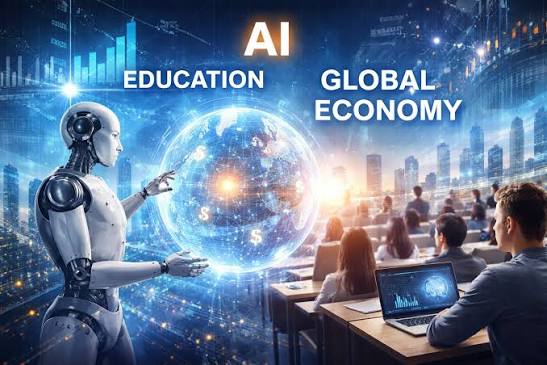
Artificial intelligence is becoming one of the most important technology trends affecting higher education in 2026. Universities around the world are exploring new ways to use AI in teaching, research, administration, and student services. At the same time, institutions are discussing how to establish responsible policies that protect academic integrity and encourage meaningful learning.
The growing presence of AI is changing conversations across campuses. Rather than treating artificial intelligence as a temporary technology trend, many universities are considering how it can become part of the long-term education system.
AI Is Moving Into Everyday University Life
Artificial intelligence is no longer limited to specialized computer science departments. Students and educators are increasingly encountering AI through writing tools, research platforms, learning applications, translation systems, data-analysis software, and digital assistants.
This expansion means universities need to consider how students should use AI responsibly.
For example, an AI tool may help a student understand a complicated concept, generate ideas for research, summarize information, or identify areas where an assignment could be improved. However, students still need to verify information and understand the work they submit.
The focus is therefore shifting from simply asking whether students use AI to asking how they use it.
Universities Are Reviewing AI Policies
One of the biggest developments in higher education is the continued discussion around institutional AI policies.
Traditional academic rules were designed before generative AI became widely accessible. Universities now need policies that address issues such as AI-assisted writing, research, programming, assessment, and academic integrity.
Some institutions may restrict AI use in specific assessments, while others may allow it when students clearly disclose how the technology was used.
The challenge is creating policies that protect academic standards without preventing students from developing skills that will be important in modern workplaces.
AI Is Changing the Classroom Experience
Artificial intelligence can also change how students interact with course materials.
AI-powered learning systems can provide explanations, practice questions, feedback, and additional examples. These tools may allow students to explore difficult subjects at their own pace.
For educators, AI can assist with certain administrative and instructional tasks. Teachers may use technology to organize materials, develop practice activities, or identify topics that students commonly struggle with.
However, technology does not replace the importance of human teaching. Instructors remain responsible for guiding students, evaluating complex work, and creating meaningful classroom experiences.
Research Is Becoming More Data-Driven
University research is another area being influenced by AI. Researchers increasingly work with large datasets, complex documents, images, and other forms of information that can be difficult to process manually.
AI systems can help researchers organize information, identify patterns, and accelerate certain stages of analysis.
This does not mean that AI can independently replace researchers. Academic research still requires careful methodology, human judgment, verification, and ethical oversight.
The growing use of AI may instead allow researchers to spend more time on questions, interpretation, and innovation.
New Skills Are Becoming Important
As AI becomes more common, universities are also reconsidering which skills students need for future careers.
Technical knowledge remains important, but students may increasingly benefit from skills such as critical thinking, information evaluation, communication, creativity, problem-solving, and AI literacy.
Understanding how AI systems work at a basic level can help students use them more effectively. More importantly, students need to recognize that AI-generated information can contain errors or misleading conclusions.
The ability to question and verify information may become one of the most important skills in an AI-supported education environment.
Concerns About Academic Integrity
The rapid development of generative AI has created new challenges for traditional assessment methods.
If students can use AI to generate text, solve certain problems, or produce computer code, universities may need to rethink how learning is evaluated.
Instead of relying entirely on take-home assignments, educators may use presentations, discussions, practical projects, supervised assessments, and personalized coursework.
The goal is not simply to prevent AI use. It is to create assessments that demonstrate whether students actually understand the material.
The Importance of Responsible AI Use
Universities also have to consider ethical questions surrounding artificial intelligence.
AI systems can produce inaccurate information, reflect biases in their training data, and create privacy concerns depending on how information is entered and processed.
Students therefore need guidance about responsible AI use.
They should understand when AI assistance is appropriate, how to verify generated information, and why confidential or sensitive academic information should not automatically be entered into online systems.
Digital responsibility is becoming an increasingly important part of modern education.
AI Could Improve Student Support
Artificial intelligence may also provide new ways for universities to support students.
Digital assistants could help students locate university information, understand administrative procedures, identify academic resources, or navigate basic questions outside normal office hours.
Such systems could make some services more accessible, particularly for students who need quick information.
However, automated systems should complement rather than completely replace human support. Complex academic, personal, or administrative situations may still require direct communication with qualified university staff.
Preparing Students for the AI Economy
The influence of AI extends beyond university campuses. Businesses across different industries are exploring automation, intelligent software, and data-driven decision-making.
Universities therefore have an important role in preparing graduates for workplaces where AI may be part of everyday professional activity.
Students who understand both the capabilities and limitations of AI can potentially approach these technologies more effectively.
Rather than competing with AI, future professionals may need to learn how to work alongside intelligent systems while contributing skills that technology cannot easily replace, including judgment, creativity, leadership, communication, and ethical decision-making.
The Future of Higher Education
The AI transformation of higher education is still developing. Universities are experimenting with different approaches, and there is no single model that will work for every institution.
Some universities may focus heavily on AI research and technical education, while others may emphasize responsible use across traditional academic disciplines.
What appears increasingly clear is that artificial intelligence will remain an important part of the education conversation.
The institutions that respond effectively will likely be those that combine technological innovation with strong academic standards and human-centered teaching.
Conclusion
Artificial intelligence is reshaping higher education in 2026 by influencing classrooms, research, academic policies, student support, and career preparation. While AI offers significant opportunities, it also creates challenges involving academic integrity, information accuracy, privacy, and responsible use.
For universities, the goal should not simply be to adopt the newest technology. Instead, institutions need to help students understand how to use AI thoughtfully while continuing to develop independent thinking and practical skills.
As the technology continues to evolve, AI literacy is likely to become an increasingly important part of modern university education.